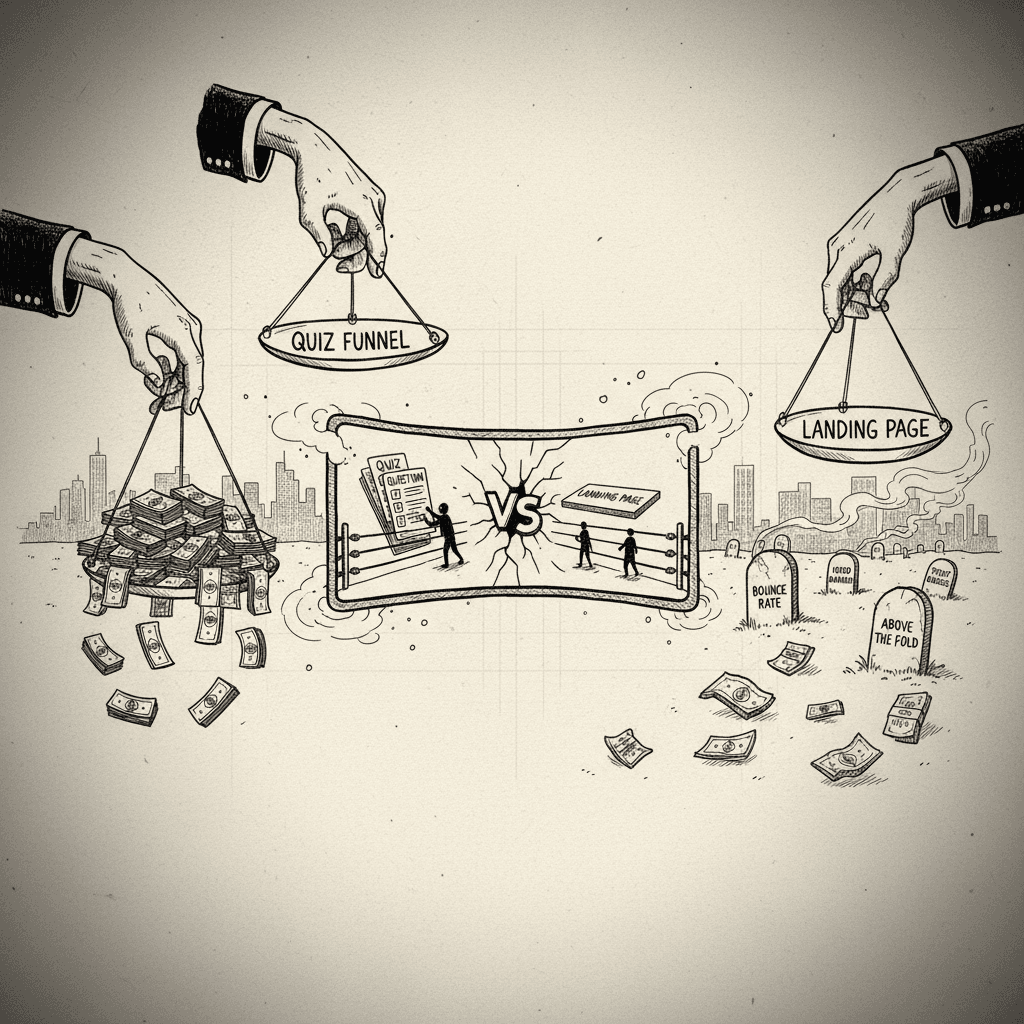
Quiz Funnel vs Landing Page: Which Converts Better for E-commerce?
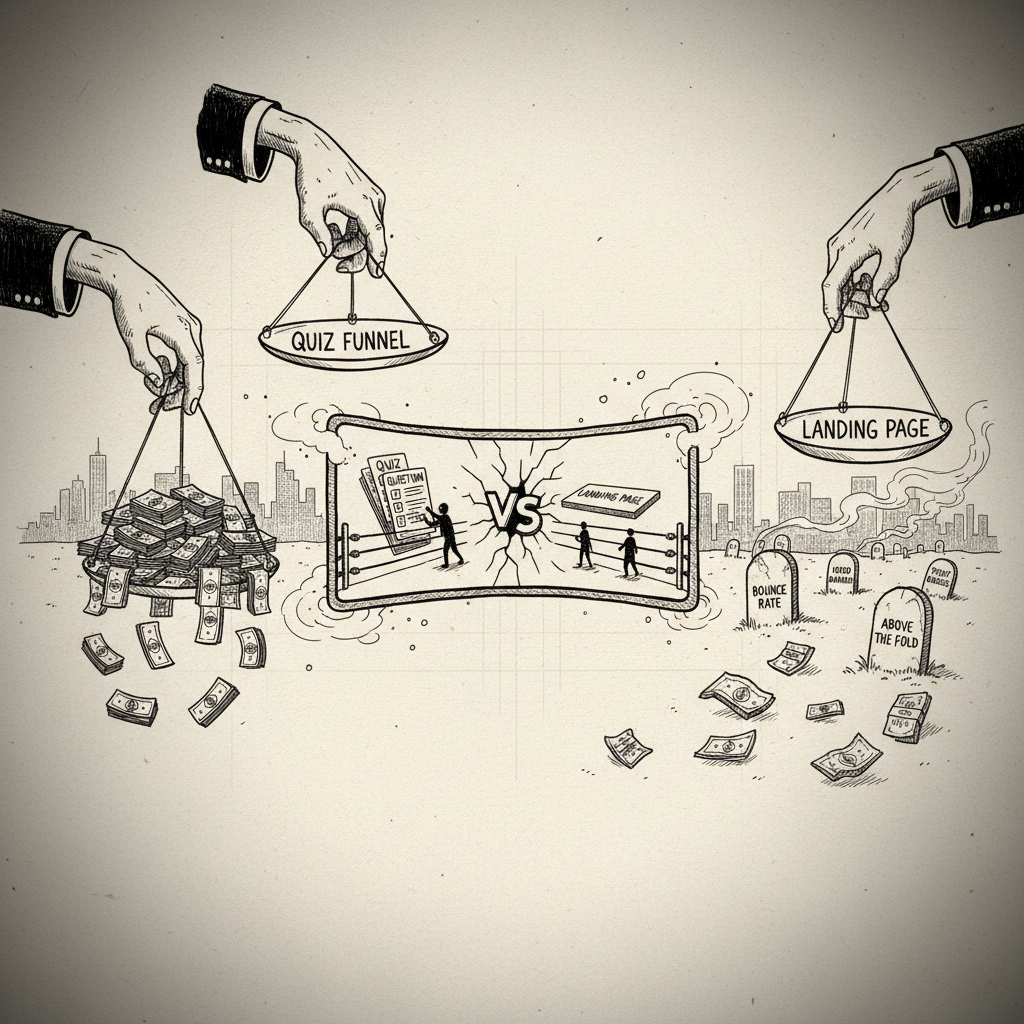
If you're still sending cold traffic straight to a product page, you're burning cash.
The standard play — Ad → Product Page → Checkout — is dead for cold traffic on an unknown brand. It was dying in 2022. It's roadkill in 2026. Yet most DTC brands I tear down are still running it like it's the only option on the menu.
This isn't a nuance piece. It's a head-to-head. Quiz funnel vs landing page, cold traffic, unknown product. One of them converts 2-4x better than the other on the exact same ad spend. Let's get into the math, the mechanism, and the receipts.
The Math Nobody Wants to Show You
Here's the uncomfortable number.
Standard DTC funnel — Ad → Product Page:
- Cold traffic conversion rate: 1-2%
Quiz funnel in the same market — Ad → Quiz → Offer:
- Cold traffic conversion rate: 3-5%+
That's a 2-4x multiplier. Same ad spend. Same product. Same market. Same audience. The only thing that changed is the architecture between the click and the checkout.
If you're running $50K/month on Meta at a 1.5% CVR on a product page, you're leaving something in the range of $50-150K in revenue on the table every single month. Not because your product sucks. Not because your ads are weak. Because your funnel is a monologue when it needed to be a conversation.
And this is why ecommerce conversion rate optimization as a discipline has quietly shifted from "tweak the hero image" to "rip out the landing page entirely."
Money's made in simplicity. But simplicity in the OFFER. Not simplicity in the funnel.
Why Landing Pages Lose on Cold Traffic
Landing pages didn't get worse. The customer got smarter. Here's why the monologue stops working the second your ad hits a skeptical scroller.
1. They're monologues, not conversations.
A landing page talks AT the visitor. It declares benefits. It lists features. It shouts testimonials. The visitor has zero input. Zero agency. They're a passive reader being pitched at by a stranger with something to sell. Cold traffic defaults to skepticism in that frame. Every claim gets silently discounted.
2. Nobody reads your landing page word-for-word. They skim.
You spent three weeks crafting that long-form sales page. Your copywriter billed you for 2,000 words of objection-crushing genius. The visitor skimmed it in 8 seconds, saw the price, and bounced. Skim-and-bounce is the default behavior on cold traffic. The page architecture assumes attention the visitor never gave.
3. Single conversion event. One shot, one kill.
A landing page has one outcome — buy or leave. If they don't buy on the first visit (and 98% don't), you get nothing. No email. No segmentation. No data. Just a Meta pixel that knows they "visited product page" and nothing about why they left.
4. Cold traffic doesn't trust strangers.
Your brand name means nothing to them. Your founder's face means nothing. Your five-star reviews might as well be fiction. A stranger walking up to another stranger and immediately asking for $79 is always going to underperform a stranger who spends three minutes genuinely asking about the other person's problems before mentioning a product.
Claims are cheap. Proof is expensive. And a landing page is all claims — stacked on top of more claims — with zero chance for the customer to prove anything to themselves.
Why Quiz Funnels Win — The 5 Mechanisms
A quiz funnel isn't "a landing page with questions." It's a completely different selling mechanism. Here are the five levers it pulls that a page simply can't.
1. Self-diagnosis — the SELF-LABEL TRAP.
You don't have to convince them they have a problem. They told you.
Every question the visitor answers is them self-labeling. "How often do you feel bloated?" → "Always." They just told themselves they have a bloating problem, out loud, with their own thumb. No copywriter on Earth can land that punch as hard as the customer landing it on themselves.
This is the core mechanism behind Happy Mammoth, Liven, Colon Broom, and every Kilo Health funnel that's ever printed. The quiz isn't a data collection form. It's a mirror.
2. Micro-commitments compound.
Every click is a tiny yes. By question 8, the prospect has said yes eight times. The ninth yes — "yes, I'll buy" — is just momentum. That's not marketing theory. That's Cialdini. Commitment and consistency bias is one of the most reliable levers in behavioral psychology, and a quiz weaponizes it on every single screen.
A landing page gives you one shot at commitment. A quiz gives you ten.
3. Belief shift / mechanism reframe.
This is where the quiz becomes a mechanism itself — a selling mechanism. A well-placed interstitial inside a quiz can do the work of a 2,000-word VSL in a single screen. Why? Because the questions before it pre-loaded all the emotional context.
Hike Footwear is the cleanest example I've seen. More on them in a minute.
4. Pre-handle objections before checkout.
"What have you already tried?" followed by "Why do you think those didn't work?" The prospect just told themselves why everything else failed. Now your product doesn't need to overcome that objection at checkout. The objection is already dead. The prospect killed it themselves, three minutes before they saw the price.
A landing page tries to pre-handle objections by listing FAQ accordions nobody opens. A quiz makes the prospect pre-handle their own objections by answering honestly.
5. Zero-party data capture.
Even if they don't buy, you still win.
Every person who takes the quiz gives you hand-raised data on their goals, struggles, prior attempts, age, and buying signals. Segment your email list by actual answers, not "visited product page." Retarget with copy that matches what they literally told you. Someone who said "I've tried supplements before and they didn't work"? Don't hit them with the same generic ad. Hit them with "why this one is different."
Same product. Different angle. Matched to what they told you themselves.
Landing pages give you one data point: did they buy or not. Quiz funnels give you 8-15 data points per visitor. That's the arbitrage compounding over months.
And participation always beats passive reading.
3 Real Brands That Prove It
Enough theory. Here are three brands running the quiz funnel play at scale. Each one pulls a different lever. Steal accordingly.
Example 1: Happy Mammoth — The Doctor's Diagnosis
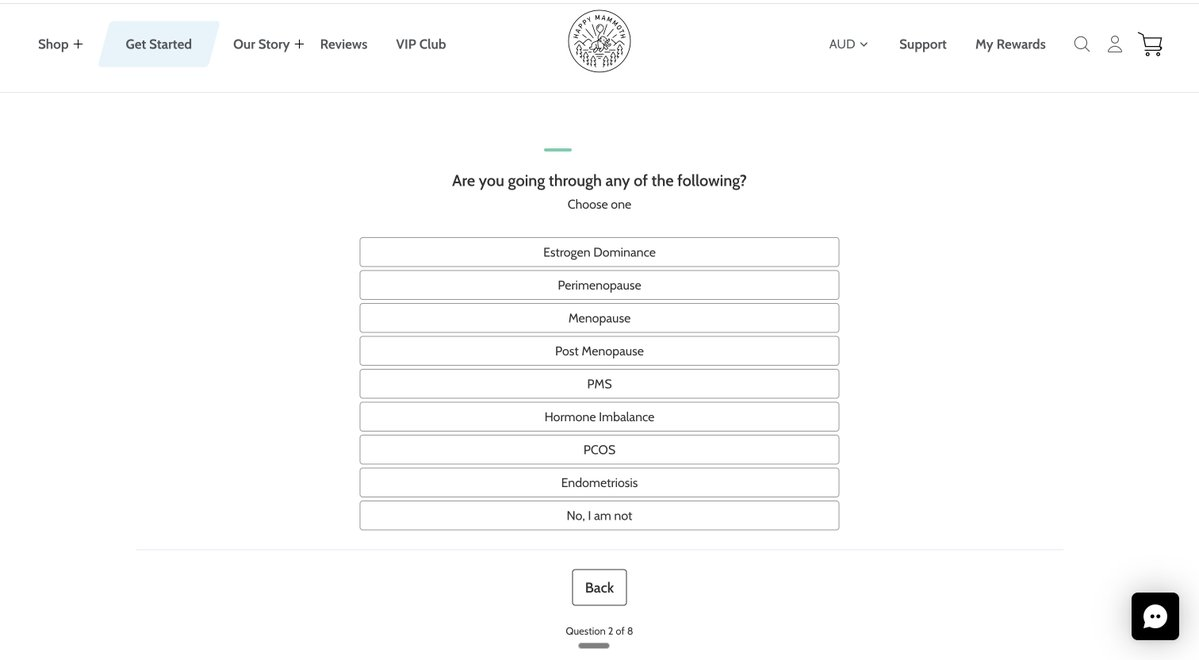
Happy Mammoth sells hormone and gut supplements to women 40+. If you check their Facebook Ad Library, you'll see a flood of "Take the Quiz" ads in their recent rotation. Not "Shop Now." Not "Buy Today." Take the Quiz.
That's intentional. They're not selling supplements. They're selling a diagnosis.
Their entire play runs on what I call the doctor's diagnosis mechanism. Think about sitting in a doctor's office. The doctor doesn't walk in and prescribe medicine on the spot. He asks you a dozen questions first. With every answer, you sit there thinking: "shit, this might be worse than I realized. I hope he knows what's wrong with me."
By the time the prescription lands, you don't question it. Why? Because it feels personalized. It feels earned. It feels like it was made for YOU.
Happy Mammoth's quiz drops you straight into frustrating symptoms. Bloating. Sleep issues. Energy. Mood. Each question makes the customer second-guess things they'd normalized as "just getting older." They walk in thinking "I'm tired sometimes." They walk out thinking "I have a hormonal imbalance that's stealing my life."
That's a belief shift. That's a funnel doing copy work through questions.
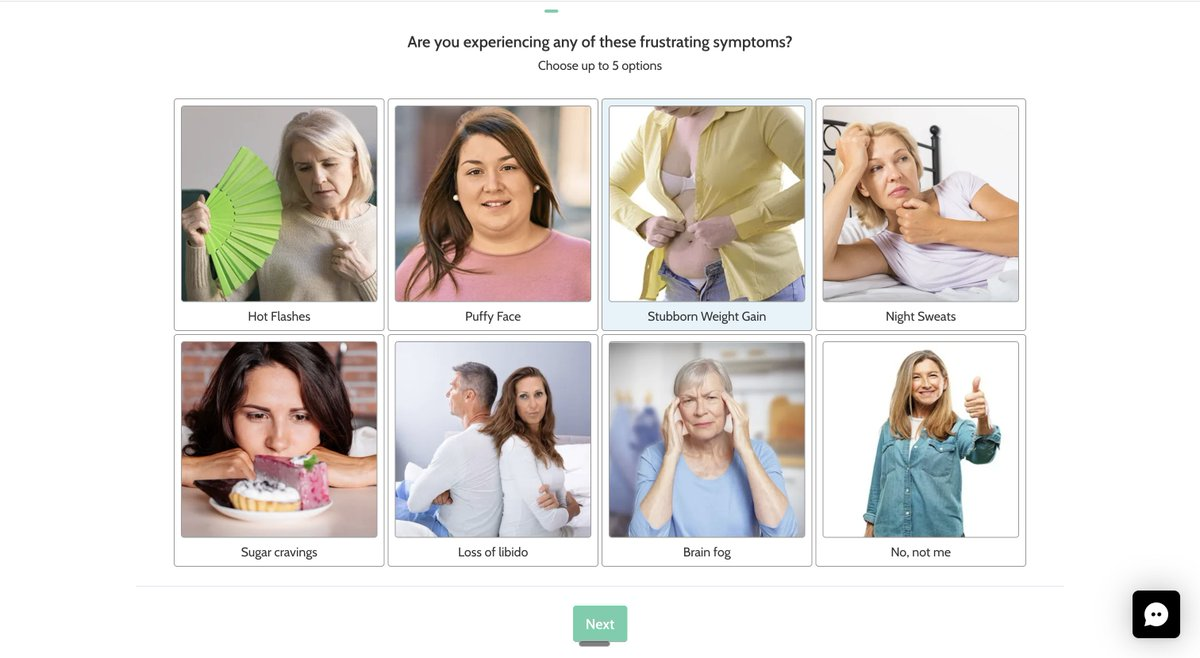
The email capture comes AFTER all the self-labeling is done. By that point, handing over the email feels like picking up a personalized plan that already belongs to you. It doesn't feel like data extraction. It feels like value delivery. That's the frame.
Landing page version of this? "Hormone support supplement for women 40+. Shop now." 1-2% CVR, if you're lucky.
Quiz version? Significantly higher, plus a retargeting database stacked with zero-party data on every hormonal symptom their ideal customer is experiencing.
What to steal: Frame the ad as "Take the Quiz" or "Get Your Free Assessment." You're offering value (a diagnosis), not extracting value (a sale). Cheaper clicks. Warmer traffic. And the quiz itself does the self-labeling work that a landing page can't touch.
Example 2: Hike Footwear — The Confession-Then-Reframe
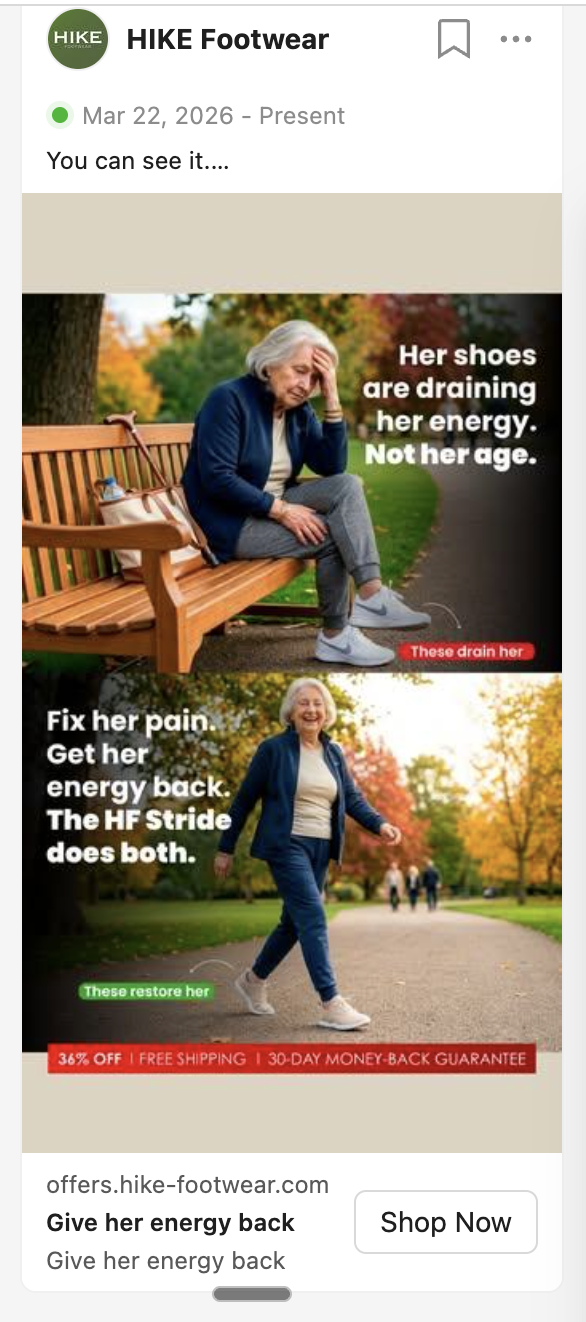
Hike Footwear sells barefoot shoes. But they're not selling to fitness bros or minimalist runners — that market is saturated and sophisticated. They're targeting grandmas with plantar fasciitis who stopped going on walks. Completely different game.
This audience is problem-aware. They know their feet hurt. What they DON'T know is that their "comfortable" orthopedic shoes are actually the cause.
The quiz runs a confession-then-reframe sequence that's surgical.
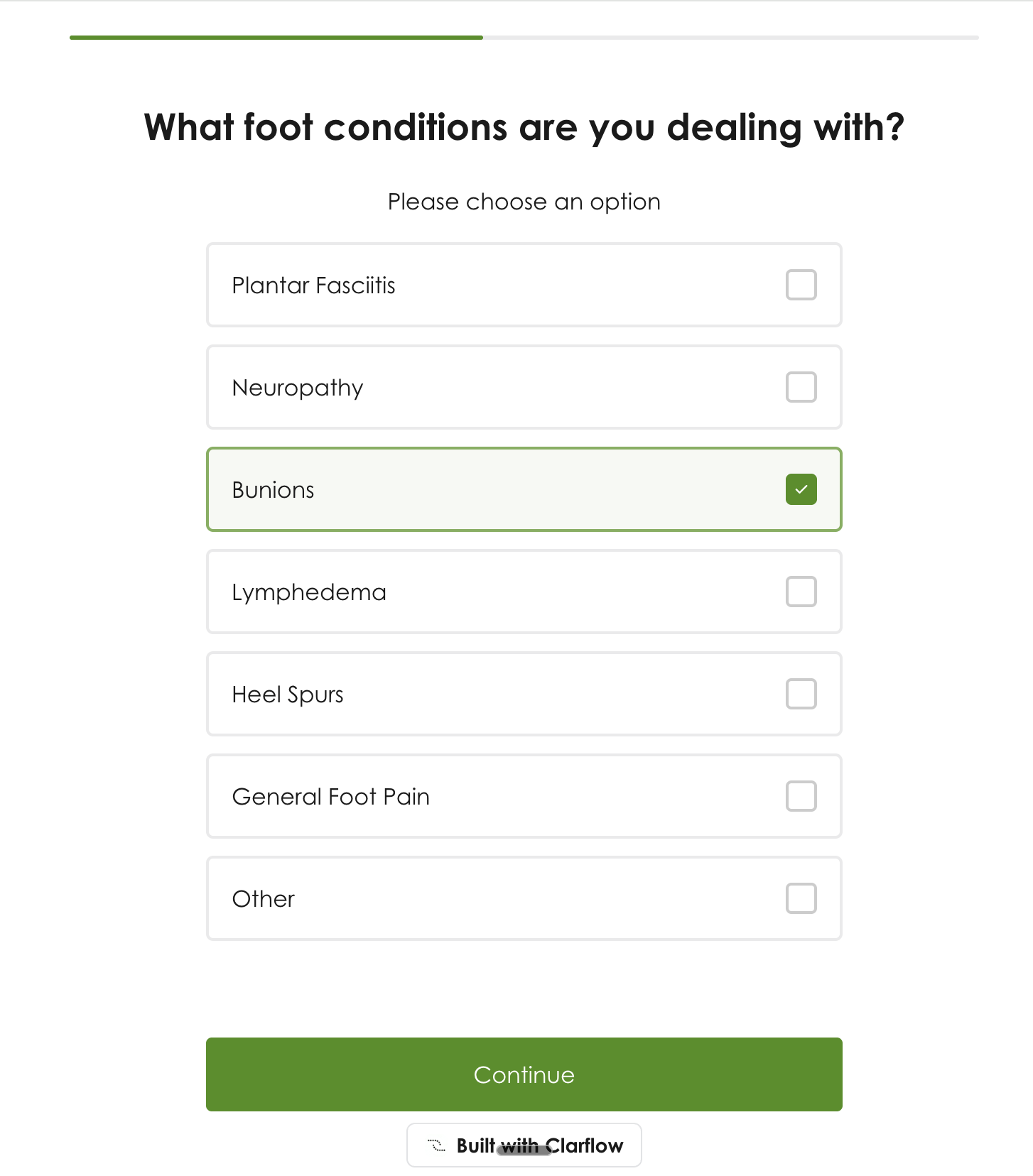
Q1-Q3 are emotional identification. "What's holding you back from enjoying life?" with options like "Missing out on activities" and "Feeling restricted daily." Not clinical. Emotional. The grandmother who stopped going on walks clicks through, and every answer deepens the pain.
Q4-Q5 are confession. "What conditions do you have?" makes them name it. "What have you already tried?" makes them admit failure. Every single answer except "nothing yet" is the prospect telling themselves that everything they've tried is broken.
The brand hasn't said a word yet. The quiz is building the case against competitors without naming a single one.
Then the highest-leverage screen in the entire funnel drops:
"Most 'Comfortable' Shoes Are Weakening Your Feet."
Before this screen: "I have bad feet." After this screen: "I have weakened feet because of bad shoes."
That single reframe makes the product the only logical answer. The customer just got done confessing that everything cushioned and supportive has failed them. Now the quiz tells them cushioned and supportive is the cause. The mechanism writes itself.
This pattern is transferable to literally any market. Supplements: "Most multivitamins are synthetic and your body can't absorb them." Skincare: "Moisturizers treat the symptom, not the cause." SaaS: "You don't have a productivity problem — you have a prioritization problem."
A landing page could say those same words. But it'd land flat because the customer hadn't yet confessed the prior failures out loud. The quiz does the emotional pre-loading that makes the reframe hit.
What to steal: The confession-then-reframe sequence. Ask what they've tried → let them admit failure → hit them with the mechanism reframe. That's competitive destruction without naming a single competitor. The prospect makes the connection themselves — and self-made connections hit 10x harder than any comparison chart you'll ever build.
Example 3: Mad Muscles — Graduality and Question Rotation ($100M+)
Mad Muscles did over $100M selling Tai Chi workouts. Not supplements. Not gadgets. Not skincare. Tai Chi. For old people. A product category most agencies wouldn't touch with a ten-foot pole.
They won on pure funnel architecture. Here's the play.
1. Graduality. Don't open with life goals or deep pain points. Start simple. Age. Gender. Activity level. Build the relationship first. Earn the right to ask harder questions. By the time the quiz asks "what's your biggest fear about aging?", the customer is 8 clicks deep and committed to answering honestly.
2. Question rotation. Never use the same question type twice in a row. Single select → Image choice → Slider → Info slide → Multi-select. Keep them on edge. Don't let them zone out and skip. Every screen has to feel like a tiny, novel interaction. Boredom is the enemy of completion rate, and completion rate is the enemy of bad CVR.
3. Positive reinforcement. Right questions + positive reinforcement = "this is made for ME." After every cluster of questions, a reassurance: "You're doing great. Your answers show you're closer to your goal than you think." The quiz becomes the emotional support the prospect didn't know they needed from a checkout flow.
4. Self-diagnosis. "What pain level do you feel?" → Moderate or high? Either answer means they've diagnosed themselves. You didn't tell them. They told themselves.
5. Simple offer. Show them their results. Tie it to the product. No 47-minute VSL needed. The quiz already did the selling.
They're not selling Tai Chi. They're selling a personalized mobility plan for aging bodies. The product is the delivery mechanism for the plan. The plan is what the customer believes they're buying — because the quiz built the plan, question by question, with their own answers.
That's funnel architecture doing $100M in revenue in a category nobody thought could scale. Not a new ingredient. Not a new formulation. A new funnel.
What to steal: Rotate your question types every screen. Start with zero-friction demographics. Use the middle of the quiz to pre-handle the exact objections your checkout page normally eats. And make sure the offer at the end FEELS like a personalized plan — because the quiz answers built the plan, not your copywriter.
When Landing Pages Still Win
I'm not going to pretend quiz funnels win every time. They don't. Here's when a landing page is still the right call.
1. Branded or repeat traffic that already trusts you.
If someone's already on your email list, already bought once, or is clicking through from a branded search — they're not cold. They know you. They know your story. They know your product. Forcing a returning customer to take a 12-question quiz before buying a repeat order is friction for friction's sake. Let them skip to the cart. A clean PDP still wins with warm audiences.
2. Single-SKU, low-complexity products.
If you sell one SKU at one price with a simple value prop — say, a $15 basic t-shirt or a commodity phone case — there's nothing for a quiz to diagnose. No self-label trap to set. No objections to pre-handle. The product is the pitch. A clean landing page with strong imagery and a sharp hook will convert just fine.
3. When the offer itself is the hook.
Huge discount. Urgent scarcity. Flash sale. BOGO. If your entire ad creative is "50% off today only," the quiz actually gets in the way. The customer came to grab a deal, not to find their overthinking score. Let them.
A quiz funnel is a selling mechanism for PRODUCTS. It's not a replacement for promotional mechanics when the offer itself is carrying the sale.
The Verdict
For cold traffic on an unknown product in a sophisticated market, the quiz funnel almost always wins. Not by 10%. Not by 20%. By 2-4x on the conversion rate — which, compounded over months of ad spend, is the difference between a brand that scales and a brand that dies.
This is what makes ecommerce quiz funnel architecture the single biggest ecommerce conversion rate optimization lever nobody in your competitive set is pulling. Your competitors are fighting over ad creative. Hero image angles. Headline A/B tests. Ingredient stories. They're all optimizing the monologue.
Meanwhile you're the only brand in the market having an actual conversation with the customer before asking for money.
That's your funnel arbitrage. And it's wide open in most categories right now — I've analyzed hundreds of DTC brands, and in most niches less than 3% of the players are running a serious quiz funnel. The rest are still firing cold traffic at product pages like it's 2019.
Bring a quiz to a market that doesn't have one, and you don't need a new product. You don't need a new mechanism. You don't need a new ingredient. The quiz IS the new mechanism.
The game isn't "quiz or landing page." The game is: which architecture moves cold strangers to warm buyers fastest? On that test, the quiz funnel vs landing page scoreboard isn't even close.
If you want to stop burning cold traffic on product pages that weren't built for it, the play is obvious. Build the quiz. Run it to cold audiences. Capture the data. Retarget on the answers. Scale the spend.
That's the arbitrage while it's still open.
Want to build one without writing a line of code? ClarFlow is the quiz funnel builder DTC brands are using to ship these funnels in hours, not weeks. Fork a proven template, customize the questions, publish. That's the whole workflow.
The window's open. Most of your competitors are still running Ad → Product Page. Go take their lunch.