
The Psychology Behind Quiz Funnels
Quiz funnels are absolutely destroying right now. Brands are scaling them to seven and even eight figures per month. But the funny thing is, most marketers don't actually understand why they're working so well.
It's not because they're "personalized." It's not because they magically match the perfect product to the customer. And it's not because they boost AOV through some clever upsell trick.
The real reason quiz funnels print money is far more interesting: they put your target customer into an emotionally primed state before you ever show them an offer.
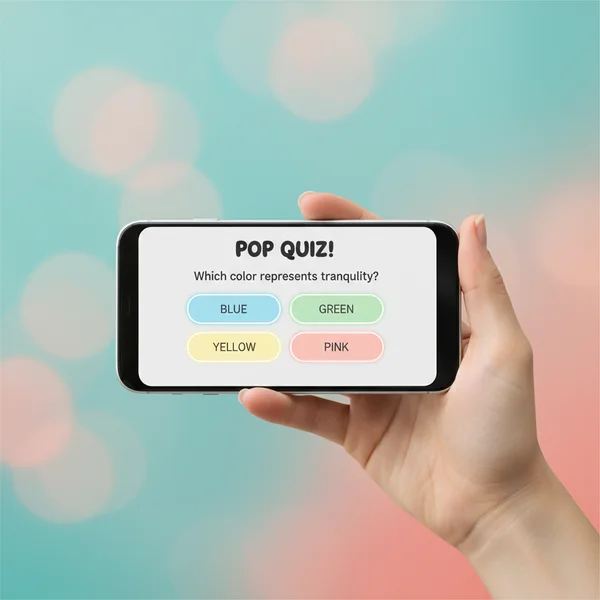
If you're still sending cold traffic from an ad straight to a product page, you're throwing money away. The page is screaming "buy my shit, buy my shit, buy my shit" at someone who isn't even sure they have the problem your product solves yet. A quiz funnel changes that entirely. By the time the customer reaches your offer, they're not being sold to — they're being answered.
This article breaks down the three psychological mechanisms that make quiz funnels convert at multiples of any other funnel format, plus the exact framework for designing questions that turn cold traffic into hot buyers.
Why Quiz Funnels Outperform Every Other Funnel Format
Before we dive into the psychology, let's anchor on something important: every funnel format has a window of opportunity. First it was advertorials. Then VSLs. Right now, quiz funnels are the dominant format crushing paid traffic — and that window won't stay open forever.
The brands milking this window the hardest aren't running quizzes because quizzes are trendy. They're running quizzes because the format gives them three distinct psychological levers that no other funnel format offers:
- Micro-commitments — every tap is a step toward the sale
- Seeding — installing the beliefs that make buying inevitable
- Pre-handling objections — neutralizing doubts before they ever surface
Every high-converting quiz funnel does all three. Get any one of them wrong and your conversion rate suffers. Get all three right and your sales page becomes a formality.
Pillar 1: Micro-Commitments and the Hypnotic "Yes" Effect

Every single time a customer answers a question, taps yes or no, or moves a slider in your quiz, they're taking one step closer to a sale. That tiny thumb movement isn't just data collection — it's a psychological down payment.
This is the hypnotic yes effect. When you get someone saying yes, yes, yes, yes in rapid succession, you put them into a highly suggestible state. Their guard drops. Their critical thinking softens. By the time they hit your offer page, they've already said yes a dozen times — saying yes one more time (this time with their credit card) feels natural, almost inevitable.
This is also why your quiz needs to feel good to interact with. Don't just slap together a generic multiple-choice form. Make every tap feel rewarding:
- Color changes when an option is selected
- Smooth transitions between questions
- Haptic-style feedback baked into the design
- Progress indicators that visibly advance with each tap
Think of it as releasing dopamine with every interaction. The more dopamine you release, the deeper the trance, and the more committed the buyer becomes.
Pillar 2: Seeding Beliefs Into the Subconscious

Marketing, at its core, is a game of belief change. Every customer who lands on your funnel arrives with a fixed set of beliefs about themselves, their problem, and the available solutions. Your job is to take those existing beliefs and align them with the beliefs that would make buying your product the only logical choice.
Seeding is how you do that without ever sounding like you're selling.
Instead of writing long-form copy that argues for your worldview, you embed your worldview directly into the questions you ask. Each question is a Trojan horse for a belief. The customer thinks they're being asked their opinion. In reality, you're installing the framework that makes the purchase inevitable.
Here's a simple example. Say you sell a gut health supplement. Compare these two questions:
- ❌ "Have you tried other gut health products?"
- ✅ "On a scale of 1 to 10, how much do gut symptoms affect your day-to-day life?"
The first one is data collection. The second one reframes gut issues as a quality-of-life problem, not just an inconvenience. Whatever number they pick, they've now mentally agreed that their gut symptoms are affecting their life. That belief — this is bigger than I thought — is now in place by the time they reach your offer.
The most sophisticated quiz funnels use almost every question to seed at least one belief. And the beliefs aren't random. They come directly from research into the customer's existing worldview.
Pillar 3: Pre-Handling Objections Before They Surface
The best copywriters don't do objection handling on their sales pages. By the time you reach the offer in their funnel, every objection has already been quietly dismantled.
A quiz is the perfect tool for this. Instead of writing a long FAQ section to address concerns, you bake the objection-handling directly into your question flow.
Take the most common objection in supplements: "How long until I see results?". A traditional sales page handles this with an FAQ block. A quiz funnel handles it like this:
When starting something new for your gut, how quickly do you expect to feel results?
- Within a few days
- Within 1–2 weeks
- Within a month
- I'm patient — whatever it takes
Now the customer has self-anchored an expectation. Whatever the product's actual timeline is, you can match it to their answer with a personalized result that says "Here's what to expect in your first 30 days." The objection has been neutralized — they handled it themselves.
Same pattern works for "I've tried everything", "It's too expensive", "I'm not sure it's for me." Identify your top 3-5 objections, then design a question that pre-handles each one.
How to Design Questions That Actually Convert
Knowing the three pillars is one thing. Designing questions that pull all three levers is another. Here are the rules every high-converting quiz follows.
Start Non-Invasive (The Gradualization Principle)
The first question of your quiz is also the most important. Never start with something invasive or socially uncomfortable. Famed copywriter Eugene Schwartz called this gradualization — you begin with the lowest-stakes question imaginable, then slowly escalate.
If you sell to women over 50, do not open with "What's your age?". Ask about their goal. Ask what they want to feel. Save the demographic data for question 7 or 8, after they've already invested the effort.
Vary the Question Format
Never use more than 2-3 of the same format question in a row. If you use multiple choice, multiple choice, multiple choice, the customer goes into autopilot and stops paying attention. Mix it up:
- Multiple choice (single select)
- Multi-select (check all that apply)
- Yes/no
- Sliders
- Image-based selection
- Agree/disagree statements
The variety keeps the customer engaged and prevents mindless tapping. Every question should feel like a new experience, not a repeat.
Every Question Must Earn Its Spot
This is the rule that separates good quizzes from great ones: every question in your quiz must do at least one of three things.
- Generate a micro-commitment
- Pre-handle an objection
- Seed a belief
If a question doesn't do at least one of these, cut it. Questions exist to move the customer closer to the sale. Every question that isn't pulling its weight is just adding friction and giving people a reason to drop off.
How Many Questions Should Your Quiz Have?
The sweet spot for most DTC quizzes is 8 to 12 questions. Anything less than 3 and you don't get enough commitment depth. Anything more than 20 and your drop-off becomes catastrophic.
That said, the right number depends on the role each question is playing. A 6-question quiz that ruthlessly seeds beliefs and pre-handles objections will outperform a 15-question quiz that's just collecting data. Quality over quantity.
Reading Drop-Off Data Like a Pro
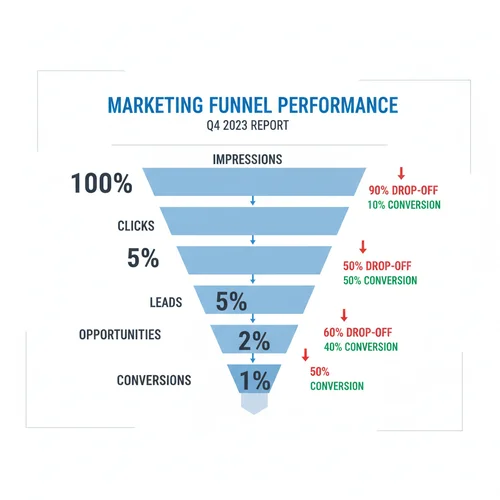
Once your quiz is live and traffic is flowing, the optimization game begins. The key metric to watch is completion rate — the percentage of people who start your quiz and reach the results page.
Target: 30%. That's the benchmark you should be aiming for. If you can hit 25% at scale, you're still in great shape.
To improve completion rate, look at your per-question drop-off rates. Most questions will leak around 1-2% of users. That's normal. What you're hunting for is the anomaly spike — the question where you suddenly lose 5%, 8%, or 10% in a single step.
When you find it, you have two options:
- Reword the question to make it less invasive or lower the perceived effort
- Remove the question entirely if it isn't doing critical work
A great example of high-friction question design: "Type out your most frustrating experience with gut health products." That's a typing field. Even though the question is psychologically powerful (it pre-handles the "I've tried everything" objection), forcing a user to type kills momentum. A multi-select with pre-written options will almost always outperform an open text input.
Pro tip: Launch your quiz with minimal friction first to establish a baseline. Once you've got data, then start adding qualifying friction. The goal is the highest completion rate that still delivers buyer-quality leads — not the fewest questions, and not the most.
The Email Capture Multiplier
Here's where most marketers leave money on the table.
When a customer reaches the end of your quiz, you have a captive audience that's already deep in the trance. Use this moment to capture their name and email in exchange for their personalized results. By this point, they've invested 8+ minutes into the quiz. Typing their email feels like nothing compared to walking away empty-handed.
Now you've got an email list of buyers who are pre-sold on the problem and the framework. From here, you build a 5-7 email sequence designed to close anyone who didn't buy on the first visit.
And if you want to go full psycho with this — segment those email sequences based on their quiz answers. Someone who answered "natural ingredients are non-negotiable" gets a sequence that hammers your clean formulation. Someone who answered "I want results fast" gets a sequence focused on speed and clinical-grade efficacy. Same product, completely different message, dramatically higher conversions.
Wrapping Up: Build Your Quiz Funnel With Intention
Quiz funnels aren't a magic trick. They're a structured way to move a stranger from cold traffic to high-intent buyer using the same psychological principles that have driven direct response copywriting for 80+ years. Micro-commitments. Belief change. Objection pre-handling.
The brands winning right now aren't the ones with the longest quizzes or the prettiest interfaces. They're the ones that understand the why behind every single question, and design their funnel to put the buyer into an emotionally primed state before the offer ever appears.
Every question is a chance to install a belief, secure a commitment, or kill an objection. Treat them that way and you'll join the brands printing money with this format while the window is still open.
Ready to Build Your Own Quiz Funnel?
Clarflow is the no-code quiz funnel builder used by the brands scaling these psychological frameworks to seven and eight figures per month. Build personalized logic, custom interstitials, and segmented email handoffs without writing a single line of code.